Holiday Sugar Rush: How Clove and Festive Spices Support Metabolic Balance

Clove and cinnamon for blood sugar support metabolic balance during festive indulgence by enhancing cellular glucose uptake and slowing carbohydrate breakdown. Rich in bioactive eugenol and polyphenols, clove eases digestive stress and supports normal pancreatic and liver function amid rich holiday sweets.
The winter holiday season transforms our tables into celebrations of culinary tradition, filled with gingerbread cookies, spiced fruitcakes, frosted pastries, and rich confections. While these comforting foods bring warmth and joy to gatherings with family and friends, the sudden influx of refined carbohydrates and simple sugars places a significant demand on the human metabolic system.
Repeated dietary spikes can trigger rapid fluctuations in systemic energy, leaving you feeling sluggish, bloated, and mentally drained right in the middle of festivities. Rather than resorting to extreme restriction, supporting your internal biology with time-tested botanical spices offers a sustainable and grounded strategy.
Traditional festive botanicals, especially whole clove buds (Syzygium aromaticum) and true Ceylon cinnamon (Cinnamomum verum), have served as aromatic culinary staples for centuries. Modern nutritional biochemistry demonstrates that these warming spices carry potent bioactive compounds capable of supporting healthy glucose management and cellular metabolic resilience.

The Holiday Sugar Cascade: How Festive Sweets Challenge Metabolism
To understand how botanical spices aid metabolic wellness, it helps to examine the digestive and systemic cascade that occurs after consuming holiday sweets.
Rapid Enzymatic Breakdown: Refined flours and sucrose in holiday treats are cleaved rapidly by salivary and pancreatic alpha-amylase into free glucose units.
Intestinal Glucose Absorption: Monosaccharides quickly enter the bloodstream via sodium-glucose linked transporters (SGLT1) along the small intestinal brush border.
Pancreatic Beta-Cell Activation: Blood glucose levels climb rapidly, prompting pancreatic beta-cells to secrete an abrupt surge of insulin to facilitate peripheral uptake.
Cellular Energy Storage: Insulin directs glucose into skeletal muscle and hepatic tissues for glycogen synthesis or fat storage.
The Reactive Slump: A steep post-prandial glucose spike is often followed by a sharp drop, commonly experienced as seasonal brain fog, sudden fatigue, and intense cravings for more sweets.
This recurring cycle can strain your metabolic flexibility throughout December. Incorporating targeted botanical compounds helps modulate the velocity of this process, supporting a steadier release of daily vitality.
Clove and Cinnamon for Blood Sugar: The Synergistic Mechanism
The traditional pairing of clove and cinnamon in seasonal baking is not merely an accident of culinary taste; it represents a functional botanical partnership with complementary metabolic actions.
The star compound in clove buds is eugenol, accompanied by concentrated polyphenolic fractions including gallic acid, ellagic acid, and biquercetin. In vitro and clinical investigations reveal that clove extract aids glucose uptake by modulating key enzymes involved in carbohydrate metabolism.
Specifically, clove polyphenols help modulate hepatic glucose-6-phosphatase and phosphoenolpyruvate carboxykinase (PEPCK), two fundamental regulatory enzymes that govern endogenous glucose production in the liver. By encouraging healthy cellular sensitivity to glucose, clove helps tissues utilize circulating nutrients more efficiently.
Ceylon cinnamon amplifies this pathway through bioactive type-A polymeric procyanidins and cinnamaldehyde. These compounds act as biological mimetics, gently engaging cell-surface receptors and facilitating the translocation of glucose transporter 4 (GLUT4) proteins to skeletal muscle cell membranes.
When combined, clove and cinnamon provide a two-pronged mechanism that buffers post-meal glucose absorption while promoting smooth glucose transit into peripheral tissues.
Which Organ Are Cloves Good For? Exploring Liver, Pancreatic, and Gut Support
When individuals research functional spices, a frequent question emerges: which organ are cloves good for? Rather than acting on a single biological tissue, clove's concentrated antioxidant profile delivers multi-organ support across key metabolic systems.

The Liver (Metabolic Command Center): The liver orchestrates carbohydrate processing, glycogen storage, and fatty acid clearance. The high ORAC (Oxygen Radical Absorbance Capacity) value of clove protects hepatic tissue against the oxidative burden induced by high-fructose corn syrups and trans fats common in commercial pastries. Animal and cell models suggest that eugenol helps maintain healthy hepatic lipid profiles and supports normal gluconeogenesis pathways.
The Pancreas (Endocrine Balance): Your pancreas works overtime during holiday gatherings, producing digestive enzymes for heavy meals while pumping out insulin to handle dessert platters. Pancreatic beta-cells are uniquely vulnerable to oxidative damage because they possess low natural concentrations of antioxidant enzymes. Clove's dense flavonoids help neutralize circulating reactive oxygen species, helping preserve healthy beta-cell architecture and functional longevity.
The Gastrointestinal Tract (Digestive Comfort): A sudden rise in sugar intake can disturb delicate bacterial ecosystems in the gut, leading to excess fermentation, gas, and abdominal distension. As an aromatic carminative herb, clove relaxes smooth muscular walls throughout the stomach and intestines, easing digestive heaviness and maintaining balanced intestinal microflora.
Comparative Profile of Festive Metabolic Botanicals
Holiday recipes weave together diverse warming botanicals, each providing distinct physiological mechanisms to sustain metabolic equilibrium.
Botanical Ingredient | Primary Active Compound | Primary Metabolic Pathway | Digestive Action | Ideal Holiday Application |
Clove Bud (Syzygium aromaticum) | Eugenol & Gallic Acid | Hepatic glucose enzyme balance; cellular insulin signaling | Eases gastric fullness; carminative | |
Ceylon Cinnamon (Cinnamomum verum) | Cinnamaldehyde & Procyanidins | Enhances GLUT4 cellular transporter activation | Promotes gentle stomach emptying | Sprinkled on breakfast oats; brewed with herbal teas |
Ginger Root (Zingiber officinale) | Gingerols & Shogaols | Stimulates thermogenic energy expenditure | Accelerates GI motility; reduces nausea | Fresh decoctions; meal seasonings |
Turmeric Rhizome (Curcumin longa) | Curcuminoids | Scavenges metabolic reactive oxygen species | Supports healthy bile flow and liver cleansing | Savory holiday soups; golden milk infusions |
Integrating these botanicals into your daily routine creates a complementary matrix that shields digestive and metabolic pathways against festive overindulgence.
Why Standardized Botanical Synergy Outperforms Raw Kitchen Spices
While baking with powdered clove and cinnamon adds undeniable seasonal charm, relying solely on culinary pinches provides inconsistent metabolic support. Ground spices kept in kitchen cabinets frequently lose their delicate volatile oils through heat, light, and extended shelf exposure.
Furthermore, consuming whole raw spices in the large volumes necessary for physiological benefits can cause direct oral and gastric irritation due to their astringent and fibrous nature. Modern botanical standardization solves this limitation by concentrating primary bioactive markers into clean, bioavailable servings.
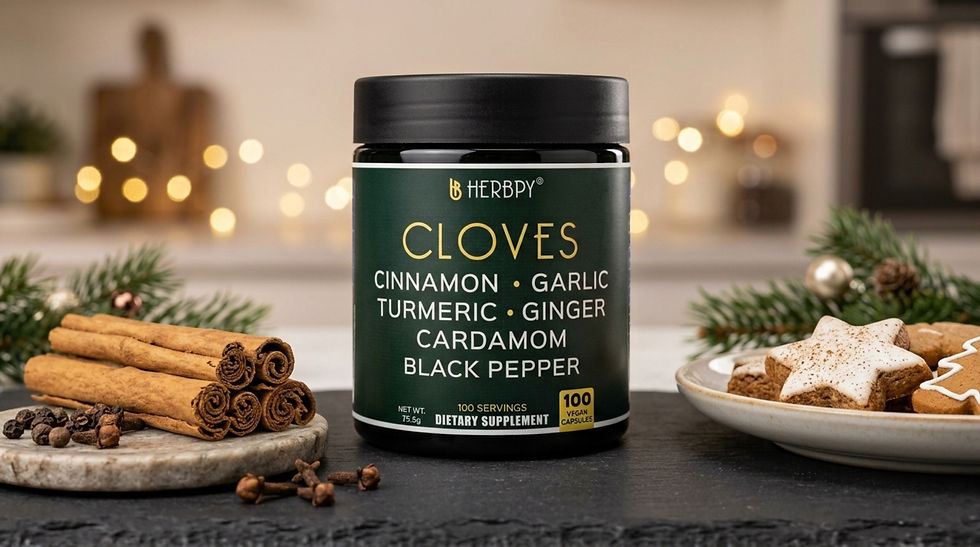
To deliver balanced metabolic support during the holidays, pairing standardized botanical extracts provides uniform potency. The synergistic formulation in the Herbpy 7in1 Clove Supplement unites a potent 500mg equivalent of concentrated Clove with a 10:1 Ceylon Cinnamon extract, alongside complementary digestive allies like Ginger, Turmeric, Garlic, Cardamom, and Black Pepper.
This standardized combination helps maintain healthy carbohydrate metabolism and digestive comfort without requiring the preparation of elaborate home concoctions. Encapsulated in vegan shells and verified through independent third-party testing, high-potency extracts deliver reliable daily botanical nutrition throughout seasonal celebrations.
4 Practical Strategies to Navigate the Holiday Sugar Rush
Balancing your metabolic health during December does not require abstaining from cherished family traditions. Implement these practical lifestyle strategies to preserve sustained vitality.
Order of Consumption Matters: When sitting down for holiday meals, enjoy fibrous vegetables, leafy greens, and protein sources before eating sugary desserts. This foundational fiber mesh slows down gastric emptying and significantly blunts post-meal glucose absorption curves.
Take a Post-Meal Stroll: A light 10- to 15-minute walk immediately after enjoying rich seasonal dishes stimulates skeletal muscles to absorb circulating glucose independently of insulin, preventing sluggishness.
Hydrate with Spiced Warm Water: Replace sugar-heavy eggnogs, sodas, and mixed holiday cocktails with warm water infused with bruised whole cloves, orange peel, and cinnamon bark. Warm fluids support gut motility while satisfying your palate with festive aromatics.
Establish a Daily Botanical Habit: Taking a standardized botanical blend with your first meal of the day provides your liver and digestive tract with proactive cellular defenses before attending festive evening banquets.
By approaching holiday feasts mindfully and honoring your body's metabolic pathways, you can fully savor seasonal traditions while maintaining internal balance, energy, and comfort.
FAQ
Can clove and cinnamon help with blood sugar spikes after eating sweets?
Clove and Ceylon cinnamon contain polyphenols and cinnamaldehyde that help slow down carbohydrate digestion in the gut and support the activation of cellular glucose transporters. Incorporating these herbs alongside a balanced diet supports the body’s natural metabolic processes, helping maintain balanced blood glucose levels already within a normal range.
Which organ benefits the most from regular clove consumption?
Clove provides multi-organ support, particularly benefiting the liver, pancreas, and gastrointestinal tract. Its high antioxidant density protects hepatic tissues from oxidative stress, safeguards pancreatic beta-cells responsible for insulin production, and acts as a soothing carminative to ease stomach heaviness and intestinal gas.
How should I take clove supplements during the holiday season?
Dietary clove supplements, such as standardized capsules, are best taken alongside or shortly after a balanced meal with a glass of warm water. Consuming them with food optimizes the absorption of fat-soluble phytonutrients and prevents stomach sensitivity while supporting smooth post-meal digestion.
Is Ceylon cinnamon safer than Cassia cinnamon for daily metabolic support?
Yes. Ceylon cinnamon (Cinnamomum verum), often called "true cinnamon," contains negligible amounts of coumarin, a natural compound found in high concentrations in common Cassia cinnamon that can burden liver tissue when consumed in significant quantities over time. Standardized Ceylon extracts provide safe, effective metabolic support suitable for regular daily use.
References
Cortés-Rojas, D. F., et al. (2014). Clove (Syzygium aromaticum): A precious spice. Asian Pac J Trop Biomed, 4(2), 90–96.
Davis, P. A., et al. (2011). Cinnamon improves glucose and lipids of people with type 2 diabetes. Diabetes Care, 26(12), 3215–3218.
Haro-González, J. N., et al. (2021). Clove essential oil: Chemical composition and bioactivity for human health. Molecules, 26(21), 6387.
Kamatou, G. P., et al. (2012). Eugenol: A review of a remarkable and versatile molecule. Molecules, 17(6), 6953–6981.
Medagama, A. B., et al. (2015). The glycaemic outcomes of Cinnamon, a review of the experimental evidence and clinical trials. Nutr J, 14, 108.
Shan, B., et al. (2005). Antioxidant capacity of 26 spice extracts and characterization of their phenolic constituents. J Agric Food Chem, 53(20), 7749–7759.