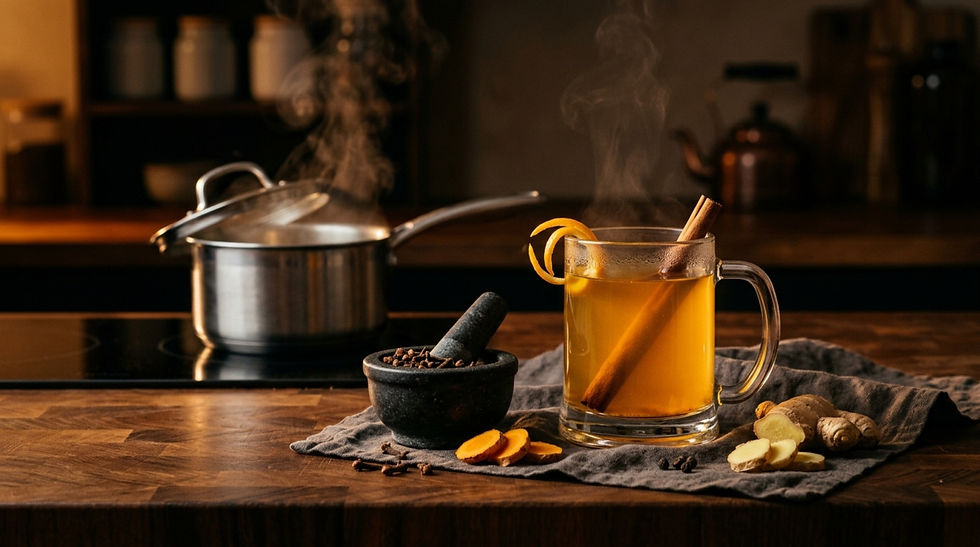
Winter Fatigue Defense: The Evening Clove Antioxidant Ritual to Unwind

Updated: 4 hours ago
Winter can change the rhythm of an ordinary day. Morning light arrives later, evenings seem to begin before work is finished, and the colder months can make it harder to maintain the routines that usually help us feel rested. Even when life continues at its usual pace, the season can leave some people feeling unusually tired, less motivated, or ready to retreat indoors.
For many adults, winter fatigue is not caused by one thing. It may reflect shorter daylight hours, irregular sleep, reduced outdoor activity, work-related stress, or the simple accumulation of responsibilities toward the end of the year. In some cases, persistent seasonal changes in mood and energy may also be associated with seasonal affective disorder (SAD), a recognized form of depression.
An evening routine cannot solve every cause of fatigue. However, it can create a useful transition between the demands of the day and the opportunity to rest. A warm, aromatic drink made with whole cloves can be part of that experience. Clove is a familiar culinary spice with a distinctive chemical profile, including eugenol and other plant compounds that researchers continue to investigate for their antioxidant properties.
The important distinction is that scientific interest in clove does not mean clove water is a proven sleep aid or a treatment for winter fatigue. Its most reasonable place in an evening routine is as a flavorful, caffeine-free beverage that encourages a slower moment at the end of the day.
.

Understanding the Winter Fatigue Cycle
Feeling tired during winter is common, but the experience can have different causes. Understanding the difference between seasonal changes, sleep disruption, and persistent fatigue makes it easier to choose routines that address the right problem.
Shorter Days and Changes in Daily Rhythm
Daylight is one of the environmental signals that helps coordinate the body's internal clock. Light exposure influences circadian rhythms, which help regulate the timing of sleep, wakefulness, and other daily biological processes.
During winter, shorter days and changes in outdoor activity can alter the pattern of light exposure. Some people spend more time indoors, receive less natural morning light, and remain under artificial lighting later in the evening.
These patterns may make it more difficult to maintain a consistent sleep-wake schedule. The effect is not identical for everyone, and winter tiredness should not automatically be attributed to a hormonal imbalance.
A more practical way to approach the season is to pay attention to when natural light enters the day, how regularly sleep occurs, and whether evening habits make it easier or harder to wind down.
Sleep Disruption and the Feeling of Low Energy
Sleep is not simply a period of inactivity. It is an important part of everyday physical and mental functioning. Adults between 18 and 60 are generally advised to obtain at least seven hours of sleep each night, although individual needs can vary.
A person may spend enough time in bed and still wake up feeling tired if sleep is frequently interrupted or does not feel restorative. Late caffeine, inconsistent bedtimes, alcohol, large meals close to bedtime, and a bedroom that is too bright or uncomfortable can all interfere with a restful night.
Winter schedules can make these habits easier to overlook. A late workday, evening screen use, or a long period indoors may gradually replace the routines that once marked the end of the day.
Rather than looking for one ingredient to correct this pattern, it is more useful to build a consistent evening environment.
When Winter Fatigue May Be More Than a Seasonal Slump
The phrase "winter blues" is often used casually, but seasonal affective disorder is a clinical form of depression with a recurring seasonal pattern. Winter-pattern SAD can involve low mood, reduced interest in activities, changes in sleep, increased appetite, and persistent low energy.
The distinction matters. A relaxing beverage or a new bedtime ritual should not be presented as a substitute for appropriate care when symptoms are persistent or interfere with daily life.
If low energy is accompanied by ongoing sadness, loss of interest, significant changes in sleep or appetite, or difficulty managing everyday responsibilities, speaking with a healthcare professional is a sensible next step. Fatigue that continues despite adequate rest may also have causes unrelated to the season.
What Is Clove, and Why Does It Attract Scientific Interest?
Clove comes from the dried flower buds of Syzygium aromaticum, an aromatic evergreen tree in the myrtle family. The buds are used in cuisines around the world, where their warm, slightly sweet, and pungent flavor works well in baked goods, soups, sauces, and seasonal drinks.
Clove is also a subject of scientific research because it contains a range of naturally occurring compounds.
Eugenol: The Characteristic Compound in Clove
One of the best-known compounds in clove is eugenol, a phenolic compound responsible for much of its recognizable aroma. Clove also contains other volatile compounds, including eugenyl acetate, beta-caryophyllene, and alpha-humulene, as well as non-volatile plant constituents.
The composition of clove can vary according to the plant material, growing conditions, storage, and extraction method. Whole dried buds, ground clove, clove extracts, and clove essential oil therefore should not be treated as interchangeable products.
Recent reviews have examined the chemical composition of clove and its reported biological activities. Antioxidant activity is one area of interest, particularly in laboratory experiments involving clove extracts and isolated compounds.
That research helps explain why clove continues to attract attention. It does not establish that drinking clove water produces a measurable improvement in energy, sleep quality, or recovery in people.
Clove Antioxidants: What the Research Actually Shows
The word antioxidant is frequently used in wellness writing, sometimes in ways that make a laboratory finding sound like a proven human benefit. A more careful explanation helps put clove research into perspective.
What Antioxidants Do in Experimental Research
Oxidation is a normal chemical process in the body. Reactive molecules are produced through ordinary metabolism and in response to different environmental and physiological conditions. Antioxidant compounds can interact with these molecules in ways that researchers can study under controlled conditions.
Clove contains phenolic compounds that have demonstrated antioxidant activity in laboratory testing. Reviews published in recent years describe eugenol and other constituents as important subjects of investigation.
However, a laboratory antioxidant result does not tell us how much of a compound is absorbed after drinking an infusion, how it is metabolized, or whether it changes a meaningful health outcome.
The amount and form used in an experiment may also differ substantially from the amount present in a cup of homemade clove water.
What Human Research Shows
The evidence for clove is much more limited when the question shifts from chemical activity to specific outcomes in people.
Current reviews describe a broad range of preclinical findings involving clove and its constituents. However, the clinical research base remains limited and does not establish clove water as an effective intervention for sleep, seasonal fatigue, circadian regulation, or morning alertness.
There is no sound basis for promising that a nightly clove infusion will:
Improve sleep architecture or increase deep sleep.
Regulate melatonin or reset the circadian clock.
Reduce winter-related fatigue.
Increase daytime energy or mental clarity.
Relieve nighttime digestive discomfort in a predictable way.
These outcomes require direct human research. The presence of eugenol or other antioxidant compounds is not enough to establish them.
What Preclinical Research Can and Cannot Tell Us
Preclinical research includes laboratory experiments and studies involving biological models such as cells or animals. These methods help researchers investigate possible mechanisms and identify questions that may be explored in future human studies.
For clove, laboratory research has examined antioxidant and antimicrobial activity, among other biological effects. Such findings are scientifically interesting, but they do not demonstrate that ordinary culinary use produces the same effects inside the human body.
The distinction is especially important when discussing sleep and relaxation. A compound showing biological activity in an experimental model does not automatically mean that consuming the spice will influence the human nervous system in the same way.
For now, clove is best understood as an aromatic food ingredient with an interesting phytochemical profile, rather than a clinically established sleep or fatigue product.
Eugenol, Antioxidant Markers, and the Limits of ORAC Values
Clove is sometimes promoted through exceptionally high antioxidant numbers, including Oxygen Radical Absorbance Capacity (ORAC) values. These figures can sound impressive, but they need context.
ORAC is a laboratory method used to measure the ability of a sample to neutralize certain reactive molecules under specific test conditions. It is not a direct measurement of how much protection a food provides inside the human body
.
A high ORAC value does not establish that a spice improves sleep, reduces fatigue, prevents disease, or produces a particular clinical effect.
The same caution applies to individual compounds such as eugenol, gallic acid, and flavonoids. Identifying these substances in clove helps describe its chemical composition. It does not establish that a cup of clove water delivers a clinically meaningful amount of them.
For everyday readers, the more useful takeaway is straightforward: clove contributes aroma and flavor to food and beverages, while its antioxidant properties remain an active area of scientific investigation.
Comparing Evening Botanicals: Clove and Chamomile
Clove is not the only botanical associated with evening routines. Chamomile, lemon balm, and other herbs are often used in traditional preparations intended to create a calming atmosphere.
Their research histories are not identical, however. It is important to avoid treating every traditional bedtime drink as if it has the same level of scientific support.
Botanical | Commonly discussed constituents | What current evidence can support | Practical evening context |
Clove (Syzygium aromaticum) | Eugenol and other aromatic and phenolic compounds | Laboratory and preclinical antioxidant research; limited evidence for specific human sleep outcomes | A warming culinary spice for an aromatic infusion |
Chamomile (Matricaria chamomilla) | Apigenin and other flavonoids | A 2024 systematic review and meta-analysis examined clinical trials and reported improvements in some sleep-quality measures, while evidence across outcomes remains limited | A familiar herbal tea used in evening routines |
Lemon balm (Melissa officinalis) | Rosmarinic acid and other constituents | Research is still developing, and findings from particular extracts should not be generalized to every tea preparation | A mild herbal beverage with a fresh, citrus-like aroma |
Chamomile provides a useful example of why evidence should be considered ingredient by ingredient. A recent systematic review examined clinical trials of chamomile and sleep. Its findings offer some human evidence for particular sleep-quality outcomes, but they do not establish that every chamomile preparation works in the same way.
That evidence cannot be transferred to clove simply because both herbs are used in evening drinks.
Clove has its own character. Its warm aroma can make a simple beverage feel seasonal and comforting. That sensory role is meaningful in everyday life, even without claiming a direct physiological effect on sleep.
The 4-Step Evening Clove Ritual
A useful evening routine does not need to be complicated. The goal is to create a predictable transition from daytime activity to a quieter part of the evening.
Clove can be included as one small element of that routine, alongside habits that have a clearer relationship with sleep and daily rhythm.
Step 1: Let the Evening Become Less Stimulating
As bedtime approaches, reduce unnecessary brightness and give yourself a little distance from work-related notifications.
You do not need to follow a rigid digital curfew at exactly 8:00 p.m. Instead, consider making the final part of the evening less visually and mentally demanding.
Lower the brightness of indoor lighting.
Avoid keeping bright screens close to your face for extended periods.
Finish work messages when practical.
Choose a quieter activity, such as reading, preparing for the next morning, or listening to something relaxing.
Research on evening light exposure suggests that light timing and intensity can influence circadian physiology. Evidence on specific blue-light reduction interventions is mixed, so it is more reasonable to focus on a generally dimmer, calmer evening environment than to promise that one screen setting will solve sleep problems.
Step 2: Prepare a Simple Clove Infusion
Whole dried cloves can be used to prepare a warm, aromatic drink.
For a simple kitchen preparation:
Place a small number of whole dried cloves in a heat-safe mug.
Add freshly boiled water.
Cover the mug and allow the infusion to steep for several minutes.
Remove the cloves or strain the liquid before drinking.
The exact preparation can be adjusted according to personal taste. Clove has a strong flavor, so a little may be enough for an aromatic cup.
This is a culinary suggestion, not a clinically tested serving or a recommended treatment for fatigue. There is no established nightly clove-water dose or proven schedule for improving sleep.
Avoid adding clove essential oil to the drink. Essential oil is a concentrated preparation and is not equivalent to steeping whole buds in water.
Step 3: Make the Drink Part of a Slower Moment
The value of an evening ritual may come less from the ingredient and more from the pause it creates.
Instead of drinking quickly while continuing to work, sit somewhere comfortable and allow a few minutes without multitasking. Notice the aroma, warmth, and flavor.
You might pair the drink with:
A few pages of a printed book.
Gentle stretching that feels comfortable.
A short journal entry about the day.
Quiet conversation with someone at home.
There is no need to inhale concentrated steam or use essential oils to make the experience more effective. The ordinary aroma of a warm culinary infusion is enough to create a pleasant sensory moment.
Step 4: Prepare a Comfortable Sleep Environment
A bedroom that is dark, quiet, and comfortably cool can support a more consistent sleep routine.
Keep the room at a temperature that feels comfortable for you. A commonly cited range for many adults is around 65°F to 68°F, although personal comfort and bedding make a difference.
Try to keep bedtime and wake time reasonably consistent, including on weekends. If you are sensitive to late-night interruptions, consider moving the last drink of the evening earlier so that it does not lead to unnecessary bathroom trips.
A warm drink does not need to cause vasodilation or lower core body temperature to be worthwhile. Its role can simply be to mark the transition into a quieter part of the day.
Comparing Clove Preparations: Whole Buds, Powder, Infusions, and Essential Oil
Not all clove preparations are the same. Their concentration, composition, and intended uses differ.
Whole Dried Cloves
Whole buds are the familiar culinary form. They can be used in cooking, baking, and warm beverages. Their flavor is concentrated, so they are generally used in small amounts.
For an evening drink, whole cloves offer a simple way to enjoy the spice without introducing a concentrated extract.
Ground Clove
Ground clove is convenient for cooking and baking. Because it has a larger exposed surface area, its aroma can be more immediate, but it may also lose freshness more quickly when stored improperly.
It can be added to food or beverages according to taste. It should not be assumed to have the same composition or extraction profile as clove essential oil.
Clove Water or Clove Tea
A clove infusion is made by steeping whole or ground spice in hot water. The amount of compounds transferred into the drink depends on several preparation factors.
There is currently no established clinical preparation method that makes clove water a proven sleep or fatigue intervention.
It is best approached as a flavored beverage rather than a therapeutic formula.
Clove Essential Oil
Clove essential oil is a concentrated product containing volatile compounds, including eugenol. It is not interchangeable with whole cloves or a mild infusion.
Do not add clove essential oil to a homemade bedtime drink or swallow it as a substitute for culinary clove. Essential oils can cause harm when misused, and concentrated preparations require different safety considerations.
Best Practices and Safety Considerations
Clove has a long history as a culinary spice, but concentrated preparations deserve more care.
A few practical distinctions are important:
Keep culinary use separate from concentrated products. Whole cloves used in food are not equivalent to essential oil or a high-concentration extract.
Do not swallow clove essential oil as a home remedy. Concentrated essential oils can cause adverse effects if ingested.
Check supplement labels carefully. Products may differ in ingredients, extraction methods, concentration, and serving directions.
Ask a healthcare professional before using concentrated herbal products if you are pregnant, breastfeeding, taking medication, or managing a health condition.
Stop using a product if an unexpected reaction occurs. Seek appropriate advice if symptoms are concerning.
There is no established evidence-based quantity of clove that should be consumed every night for winter fatigue or sleep. A culinary infusion should not be turned into a daily therapeutic dose simply because the ingredient is familiar.
If fatigue is persistent, severe, or accompanied by significant changes in mood, sleep, appetite, or everyday functioning, consider discussing it with a healthcare professional. A warm drink can be part of a pleasant routine, but it should not delay an evaluation when one is needed.
FAQ
Can drinking clove water at night improve sleep quality?
There is not enough human clinical evidence to conclude that clove water improves sleep quality, increases deep sleep, or changes sleep architecture. A warm clove infusion may be an enjoyable caffeine-free beverage, but it should not be described as a proven sleep aid.
Does clove help with winter fatigue?
Clove has been studied for antioxidant activity in laboratory and preclinical research. However, there is no established human evidence that drinking clove water reduces seasonal fatigue or increases daytime energy.
Winter fatigue can have several causes, including changes in daylight exposure, sleep disruption, stress, and health conditions. Addressing those factors is more useful than relying on one spice.
Does clove contain caffeine?
Whole dried cloves are not a source of caffeine in the way coffee, black tea, or green tea are. A simple clove infusion can therefore be a caffeine-free alternative to caffeinated evening drinks.
However, always check the full ingredient list if using a prepared tea blend, since other ingredients may contain caffeine.
How long before bedtime should I drink clove tea?
There is no clinically established timing for clove tea before bedtime. If you enjoy it, choose a time that feels comfortable and avoid drinking a large amount immediately before lying down if nighttime bathroom visits interrupt your sleep.
Can I drink clove water every night during winter?
There is no established clinical recommendation supporting a specific nightly clove-water routine for winter fatigue or sleep. Occasional culinary use is different from taking concentrated extracts every day.
If you plan to use a concentrated clove product regularly, discuss it with a qualified healthcare professional, particularly if you take medication or have an existing health condition.
Is clove essential oil the same as whole-clove tea?
No. Whole cloves are a culinary spice, while essential oil is a concentrated preparation containing volatile compounds. Their concentration and intended uses differ. Essential oil should not be added to a homemade drink or swallowed as a substitute for whole cloves.
What is a more evidence-based way to manage winter tiredness?
Start with the foundations of everyday sleep and seasonal well-being:
Get natural daylight during the day when possible.
Keep sleep and wake times reasonably consistent.
Reduce bright lighting and stimulating activities near bedtime.
Avoid caffeine late in the day.
Maintain regular physical activity that fits your ability and schedule.
Seek professional advice if fatigue or low mood persists.
If symptoms suggest seasonal affective disorder or another health concern, a healthcare professional can help determine appropriate next steps.
A More Grounded Way to Think About Winter Evenings
Clove is an aromatic spice with a rich chemical profile, and research published in recent years continues to explore eugenol and other compounds found in Syzygium aromaticum. Laboratory findings provide a reason for scientific interest, particularly in antioxidant activity. They do not yet establish clove water as a reliable way to improve sleep, regulate circadian rhythms, or defend against winter fatigue in people.
That distinction does not make an evening clove infusion less enjoyable. It simply gives the ritual a more honest place in everyday life. A warm drink can be a small sensory pleasure, a reason to step away from a screen, or a familiar part of preparing for a quieter night.
When winter days feel crowded and daylight seems brief, perhaps the most helpful evening habit is not another promise of better energy by morning. It is the decision to leave a little room at the end of the day, to slow down without expecting one ingredient to do all the work, and to let rest become part of the season rather than something postponed until everything else is finished.
References
Brown, T. M., Brainard, G. C., Cajochen, C., Czeisler, C. A., Hanifin, J. P., Lockley, S. W., Lucas, R. J., Münch, M., O’Hagan, J. B., Peirson, S. N., Price, L. L. A., Roenneberg, T., Schlangen, L. J. M., Skene, D. J., Spitschan, M., Vetter, C., Zee, P. C., & Wright, K. P., Jr. (2022). Recommendations for daytime, evening, and nighttime indoor light exposure to best support physiology, sleep, and wakefulness in healthy adults. PLOS Biology, 20(3), e3001571. https://doi.org/10.1371/journal.pbio.3001571
Centers for Disease Control and Prevention. (2024, May 15). About sleep. https://www.cdc.gov/sleep/about/index.html
Haro-González, J. N., Castillo-Herrera, G. A., Martínez-Velázquez, M., & Espinosa-Andrews, H. (2021). Clove essential oil (Syzygium aromaticum L. Myrtaceae): Extraction, chemical composition, food applications, and essential bioactivity for human health. Molecules, 26(21), 6387. https://doi.org/10.3390/molecules26216387
Kazemi, A., Shojaei-Zarghani, S., Eskandarzadeh, P., & Hashempur, M. H. (2024). Effects of chamomile (Matricaria chamomilla L.) on sleep: A systematic review and meta-analysis of clinical trials. Complementary Therapies in Medicine, 84, 103071. https://doi.org/10.1016/j.ctim.2024.103071
National Institute of Mental Health. (2022). Seasonal affective disorder (SAD): More than the winter blues. https://www.nimh.nih.gov/health/publications/seasonal-affective-disorder-sad-more-than-the-winter-blues
Shechter, A., Quispe, K. A., Mizhquiri Barbecho, J. S., Slater, C., & Falzon, L. (2020). Interventions to reduce short-wavelength (“blue”) light exposure at night and their effects on sleep: A systematic review and meta-analysis. Sleep Advances, 1(1), zpaa002. https://doi.org/10.1093/sleepadvances/zpaa002
Xue, Q., Xiang, Z., Wang, S., Cong, Z., Gao, P., & Liu, X. (2022). Recent advances in nutritional composition, phytochemistry, bioactive, and potential applications of Syzygium aromaticum L. (Myrtaceae). Frontiers in Nutrition, 9, 1002147. https://doi.org/10.3389/fnut.2022.1002147