What Happens If You Eat Ginger Root Every Day? Benefits and Risks
Updated: Sep 25
Ginger root (Zingiber officinale) is widely used in foods, teas, and supplements. But what actually happens if you consume ginger regularly?
Direct Answer: For most people, using ginger regularly in food or beverages can be part of a healthy diet. Human research suggests ginger may help with certain types of nausea and may influence digestive function. It has also been studied for menstrual discomfort, body weight, blood pressure, and metabolic markers, although results vary by dose, preparation, and population. Ginger can also cause heartburn, abdominal discomfort, or diarrhea in some people.
What Are the Best-Supported Benefits of Ginger?

1. Ginger May Help With Certain Types of Nausea
Nausea is one of the most studied uses of ginger.
NCCIH reports that ginger may help with nausea and vomiting associated with pregnancy.[1] A 2024 umbrella review also found that most meta-analyses reported improvement in pregnancy-related nausea, although the overall quality of evidence ranged from critically low to low.[2]
Evidence differs for other causes of nausea. Most studies have not found ginger helpful for motion sickness, while evidence for chemotherapy- and surgery-related nausea remains uncertain.[1]
Bottom line: Ginger has meaningful human evidence for some types of nausea, particularly pregnancy-related nausea, but it should not be presented as universally effective for all causes.
2. Ginger May Influence Digestive Function
Research has also examined ginger's effects on gastric emptying and gastrointestinal symptoms.
A small randomized trial found that ginger accelerated gastric emptying in people with functional dyspepsia, although symptoms did not significantly improve.[3]
A 2025 randomized trial using a specific steamed ginger extract reported improvements in several gastrointestinal symptoms compared with placebo.[4] Because that study used a standardized extract, the findings should not automatically be applied to fresh ginger, tea, or every ginger supplement.
Bottom line: Ginger may support certain aspects of digestive function, but claims that daily ginger reliably eliminates bloating, gas, or indigestion are stronger than current evidence supports.
3. Ginger Has Been Studied for Menstrual Cramps
Clinical research suggests ginger supplements may help reduce pain associated with primary dysmenorrhea.
A 2024 systematic review and meta-analysis reported reductions in menstrual pain compared with placebo, although study quality and safety reporting varied.[5]
These findings relate to specific preparations and doses used in clinical trials—not simply to eating ginger in food every day.
What About Weight and Metabolic Health?
Ginger supplementation has also been studied for body weight, blood pressure, blood glucose, and blood lipids.
A 2024 meta-analysis of randomized trials reported modest reductions in body weight and some body-composition measures with ginger supplementation.[6]
Other reviews have found possible effects on cardiometabolic markers, but studies often involve specific doses, supplements, and populations with existing metabolic conditions.
For that reason, ginger should not be considered a proven weight-loss treatment. Research on ginger and weight management is better understood as an emerging area rather than an established daily benefit.
Is It Safe to Eat Ginger Every Day?
Culinary ginger is generally well tolerated, but some people may experience:
Heartburn
Abdominal discomfort
Diarrhea
Mouth or throat irritation
Safety also depends on the form. Fresh ginger used in food is different from concentrated extracts or supplements.
Regular or concentrated ginger use may also interact with medications, so people taking prescription medicines should discuss supplement use with a healthcare professional.[1]
Pregnant individuals should also discuss concentrated ginger supplements with their healthcare provider, even though ginger has been studied for pregnancy-related nausea.
How Much Ginger Should You Use?
There is no single evidence-based daily amount that is ideal for everyone.
Clinical studies use different forms, doses, and durations. A dose tested in one study should not automatically be applied to fresh ginger, tea, juice, powder, or another supplement.
For everyday culinary use, ginger can be added according to taste and tolerance. For supplements and concentrated extracts, follow the product label and discuss regular use with a healthcare professional if you take medications or have a medical condition.
Easy Ways to Include Ginger in Your Routine
Ginger Tea
Ginger tea can be made by steeping fresh ginger in hot water for a simple caffeine-free drink.
Tea is a food-style preparation, so its concentration may differ substantially from standardized extracts used in clinical studies.
Fresh Ginger
Fresh ginger can be grated or sliced into soups, stir-fries, curries, smoothies, and other foods.
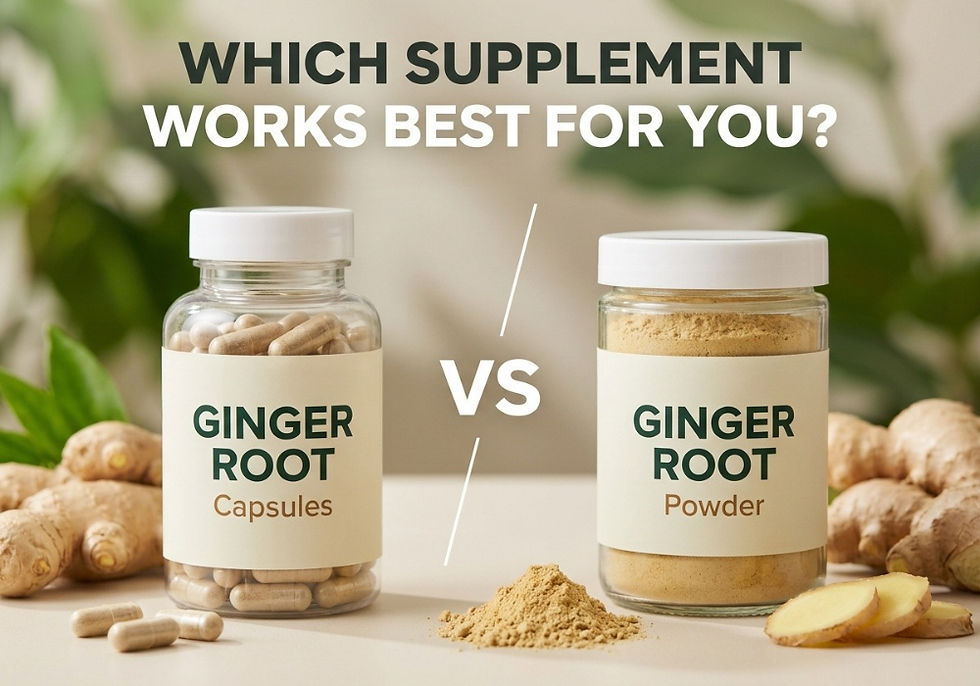
Powders and Capsules
Ginger is also available as powders and capsules, which provide more concentrated or measured preparations.
Different forms should not be treated as interchangeable because their concentrations and active compounds can vary.
Conclusion
Eating ginger regularly can be a simple way to include a flavorful botanical in your diet.
The strongest human evidence supports ginger for certain types of nausea, particularly pregnancy-related nausea. Research has also examined digestive function, menstrual cramps, body weight, and cardiometabolic markers, but results vary by preparation, dose, and population.
Daily ginger is not a proven detox, immunity booster, or weight-loss treatment. Food-level use is generally well tolerated, while concentrated supplements deserve more attention to dose, side effects, and possible medication interactions.
FAQ
Is it safe to eat ginger root every day?
Food-level ginger is generally well tolerated by most adults. Larger or concentrated amounts may cause heartburn, abdominal discomfort, or diarrhea.
What does ginger do to your stomach?
Research suggests ginger may influence gastric emptying and some gastrointestinal symptoms, but effects vary by preparation and condition.
Does daily ginger help with weight loss?
Some supplementation trials have found modest changes in body weight, but ginger is not a proven weight-loss treatment.
Does ginger boost immunity?
Ginger contains biologically active compounds, but there is not enough clinical evidence to say that eating ginger daily “boosts” immunity or prevents colds.
Can you take ginger supplements every day?
Some ginger supplements have been used safely in research, but appropriate use depends on the formulation, medications, health conditions, and individual tolerance.
References
National Center for Complementary and Integrative Health. Ginger: Usefulness and Safety. Updated February 2025.
Tiani KA, et al. The Use of Ginger Bioactive Compounds in Pregnancy: An Evidence Scan and Umbrella Review of Existing Meta-Analyses. Advances in Nutrition. 2024;15(11):100308.
Hu ML, et al. Effect of ginger on gastric motility and symptoms of functional dyspepsia. World Journal of Gastroenterology. 2011;17(1):105–110.
Baek HI, et al. Efficacy and safety of steamed ginger extract for gastric health: a randomized, double-blind, placebo-controlled multi-center clinical trial. Food & Function. 2025;16:7316–7329.
Moshfeghinia R, et al. Ginger for Pain Management in Primary Dysmenorrhea: A Systematic Review and Meta-Analysis. Journal of Integrative and Complementary Medicine. 2024;30(11):1016–1030.
Rafieipour N, et al. Ginger intervention on body weight and body composition in adults: a GRADE-assessed systematic review and dose-response meta-analysis of 27 randomized controlled trials. Nutrition Reviews. 2024;82(12):1651–1665.