
Essential Spring Kitchen Spices and the Meaning Behind Their Use
As winter fades and spring begins to take shape, kitchens often change in subtle ways. Heavier meals slowly give way to lighter dishes. Cooking methods shift. Ingredients that felt comforting during colder months may feel less appealing, while fresh flavors and gentle warmth become more welcome. Among the most noticeable changes is the renewed presence of spices in everyday cooking.
Spring kitchen spices are not chosen randomly. Across cultures, these spices carry meaning rooted in seasonal rhythm, climate, and daily living. They are used not only for flavor, but also for balance, transition, and continuity as the body adjusts from winter patterns to spring routines.
Understanding the role of essential spring spices helps explain why certain flavors feel especially fitting during this time of year.
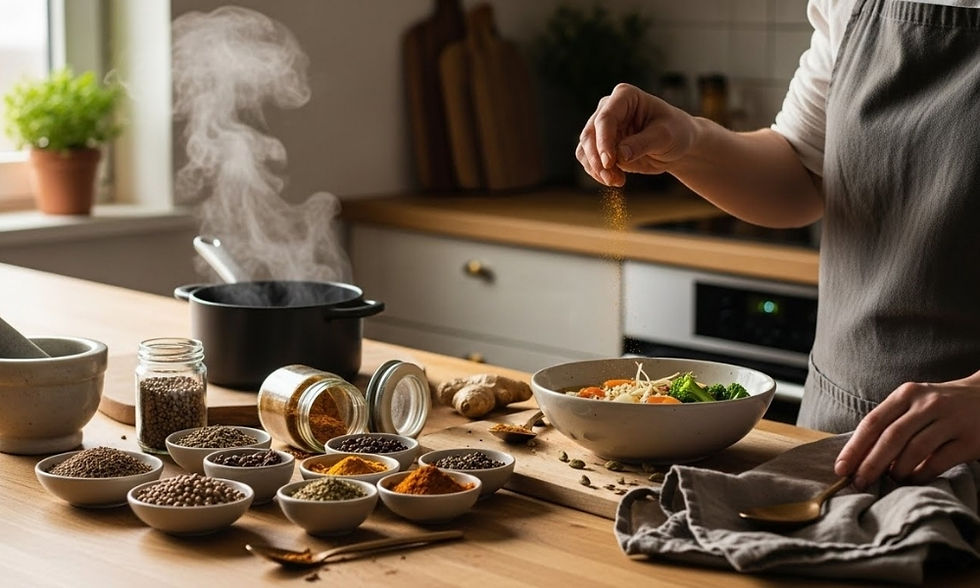
Why Spices Play a Seasonal Role in Spring Cooking
Spices act as bridges between seasons. Winter cooking often relies on deep warmth and richness, while summer emphasizes cooling and simplicity. Spring sits between these two states.
During this transition, spices help maintain continuity while allowing change. They add warmth without heaviness and complexity without excess. This balance makes them particularly suited to spring kitchens.
Spices in spring often:
Support lighter meals without making them feel cold
Add depth without overwhelming digestion
Reflect seasonal rhythm rather than dietary rules
Spring Spices Reflect Cultural Wisdom
Across global food traditions, spring spices appear consistently, even though specific ingredients vary by region. These patterns developed through observation rather than instruction.
Cultural use of spring spices often reflects:
Climate changes
Seasonal availability
Daily energy shifts
Traditional cooking rhythms
These spices are woven into everyday meals rather than reserved for special occasions, highlighting their role as seasonal companions rather than functional tools.
Ginger as a Transitional Spice
Ginger appears frequently in spring cooking across many cultures. Its flavor is warming but not heavy, making it suitable for meals that are lighter than winter dishes.
In spring kitchens, ginger is often used in:
Soups
Teas
Stir-cooked vegetables
Simple broths
Its presence reflects the need for gentle warmth as digestion transitions from slower winter rhythms.
Turmeric and Its Symbolic Role in Renewal
Turmeric carries strong cultural symbolism tied to renewal and brightness. Its color alone often represents freshness and new beginnings.
In spring cooking, turmeric is commonly added to:
Rice dishes
Vegetables
Simple sauces
Warm drinks
Its use signals a shift toward lighter, more vibrant meals while maintaining grounding elements.
Cinnamon Beyond Winter
While cinnamon is often associated with winter, many cultures continue using it in small amounts during spring. In spring kitchens, cinnamon appears more subtly.
It is used to:
Add warmth without heaviness
Balance fresh ingredients
Maintain continuity from winter cooking
This restrained use reflects spring’s emphasis on moderation.
Cardamom as a Light Aromatic
Cardamom brings fragrance rather than weight. Its aromatic quality makes it well-suited for spring, when meals become lighter but still benefit from complexity.
In spring kitchens, cardamom often appears in:
Light desserts
Beverages
Rice-based dishes
Its role is more sensory than structural, contributing to the overall experience of seasonal eating.
Clove Used Sparingly in Spring
Clove remains present in spring cooking, but in smaller amounts. Rather than dominating dishes, it often appears as a background note.
This shift reflects spring’s movement away from intensity and toward balance. Clove helps maintain warmth while allowing fresher flavors to lead.
The Meaning Behind Spice Combinations
Spring cooking often uses fewer spices at once. Instead of complex blends, simpler combinations are favored.
This approach reflects:
Seasonal simplicity
Easier digestion
Greater focus on primary ingredients
Spices support rather than define meals during this season.
Spices as Part of a Daily Routine
In spring, spices are not reserved for elaborate cooking. They are part of everyday meals, reinforcing rhythm and familiarity.
This regular use helps meals feel satisfying without excess. It also maintains a sense of continuity as routines change.
How Spring Spices Shape Sensory Experience
Spices influence more than taste. Aroma, warmth, and familiarity shape how meals feel emotionally.
Spring spices often:
Create a sense of comfort without heaviness
Support calm eating environments
Encourage slower, more attentive meals
These sensory qualities align with spring’s transitional nature.
Seasonal Balance Over Dietary Rules
Spring spice use is guided more by feeling than by instruction. Rather than following strict rules, cooks adjust amounts and combinations intuitively.
This flexibility supports seasonal balance and allows meals to evolve naturally.
Herbpy Corner
Throughout seasonal transitions, many cultures continue to rely on familiar kitchen spices to maintain comfort and rhythm. Ginger, turmeric, cinnamon, cardamom, and clove remain present in spring cooking, though often used more gently than in winter.
Herbpy Ginger Capsules and Herbpy Turmeric Capsules reflect this cultural approach by offering well-known spring-friendly spices in a simple, everyday format. For those who enjoy the presence of traditional spices but do not always have time to cook with them daily, capsule formats can feel like a convenient way to stay connected to familiar seasonal flavors.

People often incorporate spring spices into their routine because they:
Pair naturally with lighter meals
Maintain a sense of warmth during transition
Reflect long-standing culinary traditions
Fit easily into daily seasonal habits
This Herbpy Corner highlights seasonal lifestyle traditions and how warm spices can support gentle adjustment during periods of seasonal change. It is shared for lifestyle context only and is not intended as medical guidance or therapeutic advice.
Spices Help Meals Feel Complete During Transition
As meals become simpler in spring, spices help prevent them from feeling incomplete. A small amount of spice can transform basic ingredients into satisfying dishes.
This balance allows people to enjoy lighter meals without feeling deprived.
Why Spring Spices Are Often Used Freshly
Fresh preparation becomes more common in spring. Grinding spices, slicing ginger, or lightly toasting seeds adds immediacy to cooking.
This reflects spring’s emphasis on freshness and presence rather than storage and preservation.
Seasonal Eating as a Cultural Practice
Spring spice use reinforces the idea that eating is cultural as much as nutritional. Meals carry meaning tied to time, place, and season.
Spices serve as markers of seasonal identity within daily life.
Soft Seasonal Reflection
Essential spring kitchen spices reflect the balance between warmth and lightness that defines the season. Their use is not about intensity or control, but about continuity and adaptation.
By understanding the meaning behind these spices, spring cooking becomes less about following recipes and more about responding to seasonal rhythm. Meals evolve naturally, guided by tradition, intuition, and the quiet cues of the changing environment.
FAQ
1. Why do spices feel different in spring than in winter?
They are often used more lightly to match seasonal rhythm.
2. Do all cultures use the same spring spices?
No, but many share similar warming and aromatic qualities.
3. Is it normal to use fewer spices in spring?
Yes. Simplicity often suits the season.
4. Why are aromas important in spring cooking?
Aroma supports sensory balance during transition.
5. Can spices remain part of daily meals year-round?
Yes. Their role simply shifts with the season.
References
Rozin, P. (2005). The meaning of food in culture. Appetite, 45(1), 1 to 10.
Mintz, S. W. (2006). Food and culture. Journal of Cultural Anthropology, 21(2), 35 to 47.
Anderson, E. N. (2014). Everyone eats. New York University Press.
Katz, S. E., & Weaver, W. W. (2003). Encyclopedia of food and culture. Scribner.
Johnston, J. D. (2014). Seasonal rhythm and human behavior. Journal of Biological Rhythms, 29(6), 395 to 403.


